Designing out 2,800 hours of avoidable sales-chat load
I audited 36,000+ conversations, studied how comparable education platforms qualified visitors, and redesigned the chatbot around intent, course discovery, and a deliberate human handoff.
- Role
- Conversation Designer
- Data
- 36,000+ conversations
- Partners
- Inside sales & regional operations
- Deliverable
- Qualification flow & rollout plan
Qualification prototype
Intent first. Context second. Human help when it adds value.
Original screens from the supplied Figma file.The sales team was absorbing low-intent traffic
More than half of incoming chat sessions did not become viable leads. Consultants were still handling syllabus requests, pricing questions, spam, mid-greeting drop-offs, and visitors who were only beginning to explore.
That created two connected problems: learners could not complete common tasks without waiting for a person, and consultants had less time for conversations where their judgment mattered.
What the 2,800-hour number means
It sizes the consultant time attached to low-intent and self-service conversations. It is the opportunity the redesign targeted, not a claim that every one of those hours was recovered after launch.
Manual review made the data usable
Automated language processing was not dependable enough for the shorthand, incomplete sentences, and inconsistent intent in the raw transcripts. I manually reviewed a 10% sample—3,716 conversations—and classified the behaviors behind the headline volume.
Higher intent
Visitors willing to share contact details, describe an upskilling goal, or ask for specific program information.
Lower intent
Spam, unrelated requests, early drop-offs, and information needs that could be resolved without a consultant.
Benchmarking exposed the recurring failure modes
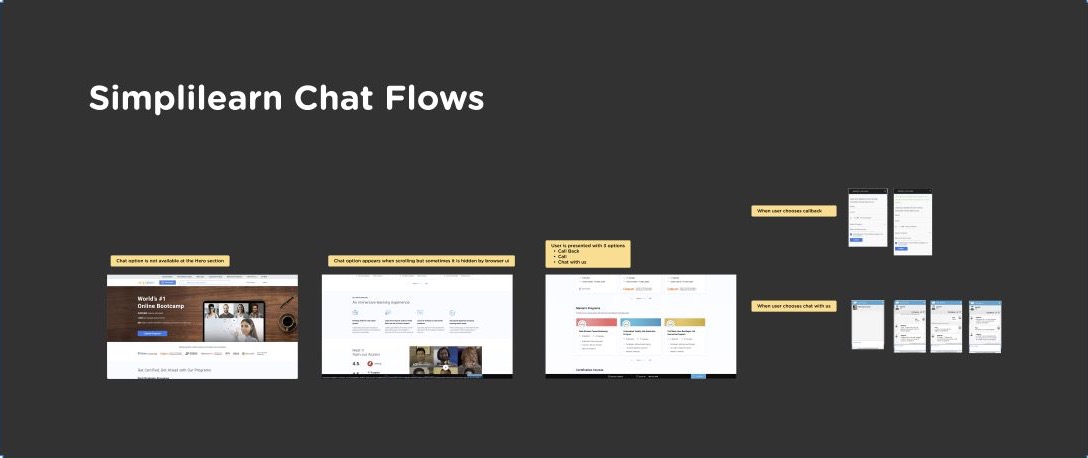
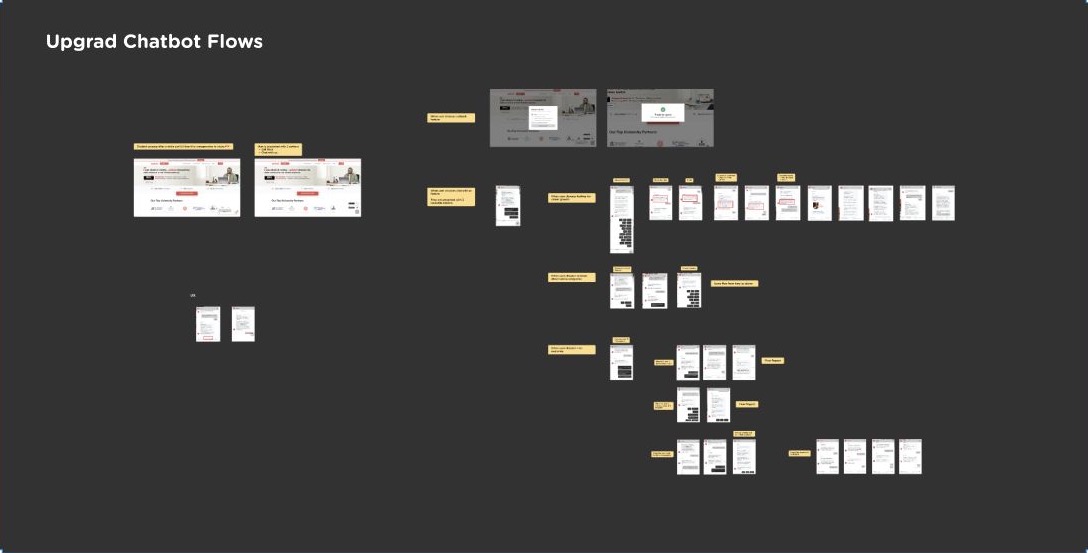
I mapped qualification and handoff patterns across education platforms including Hero Vired, Emeritus, Great Learning, and UpGrad. The visual audit showed the same issues repeating in different forms: contact capture came too early, course discovery was shallow, and the promised counselor was not always available at the end of the flow.
Qualify with purpose
Ask only for information that changes routing or gives a consultant useful context.
Support exploration
Let visitors browse by learning goal and domain instead of forcing an immediate lead form.
Set handoff expectations
Keep the human route visible and avoid promising an instant counselor when none is available.
The redesign starts with intent, not contact capture
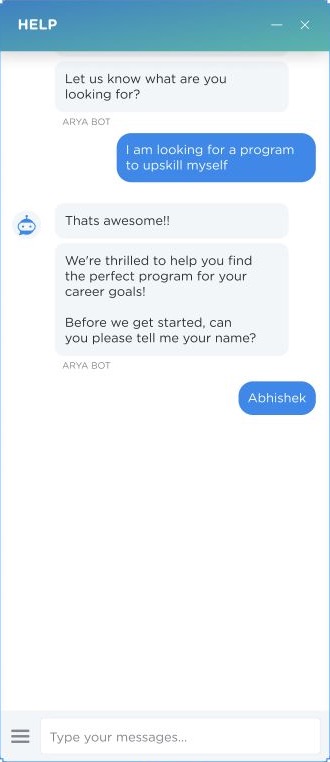
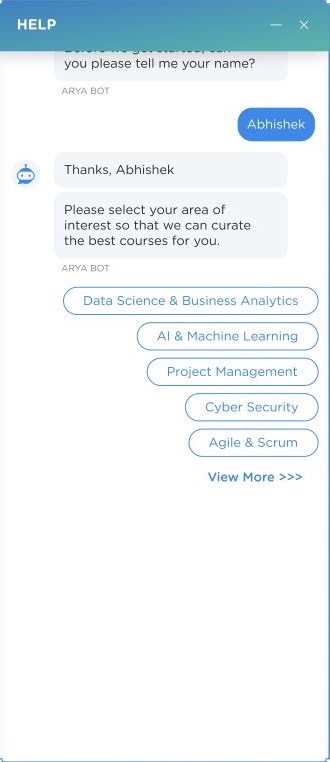
The proposed flow first asks what the visitor is trying to accomplish. A learner who wants to upskill can name themselves, browse a curated set of subject areas, expand the list, or admit they are unsure. Each answer advances the conversation without hiding the route to a person.
Four decisions shaped the full flow
- Route by intent. Distinguish program discovery, syllabus and pricing needs, callback requests, and visitors who want to talk now.
- Progressively disclose the catalogue. Show a useful first set of domains, then let people reveal more rather than facing a wall of options.
- Resolve common requests in chat. Program information and supporting material should not require a consultant to join.
- Preserve a deliberate human handoff. Automation prepares the conversation; it does not remove the consultant from the experience.
Rollout paired the new flow with measurement
The experience moved into a phased rollout so the team could review behavior and copy before expanding coverage. The shipped flow gave visitors a clearer way to self-serve and gave consultants more context when a conversation reached them.
Confirmed output: a shipped qualification and self-service flow backed by transcript analysis and competitor research.
Measurement boundary: the ~2,800 monthly hours remain the addressable workload estimate. Realized savings require post-launch handling-time and lead-quality data.
What I would measure next
I would instrument each branch against consultant handling time, callback completion, lead quality, and downstream enrollment. That would separate three different outcomes—traffic filtered, time actually recovered, and sales conversations improved—instead of compressing them into one headline metric.